The Radio Astronomy and Space Observation Research facility, or RASOR, is conceived as the United Kingdom's Next Generation radio observatory facility to provide unique observational and monitoring capabilities for frontier science in cosmology, astrophysics, space domian awareness and prediction of adverse space-weather events, addressing the space-sector requirements for the characterisation of national assets in orbit.

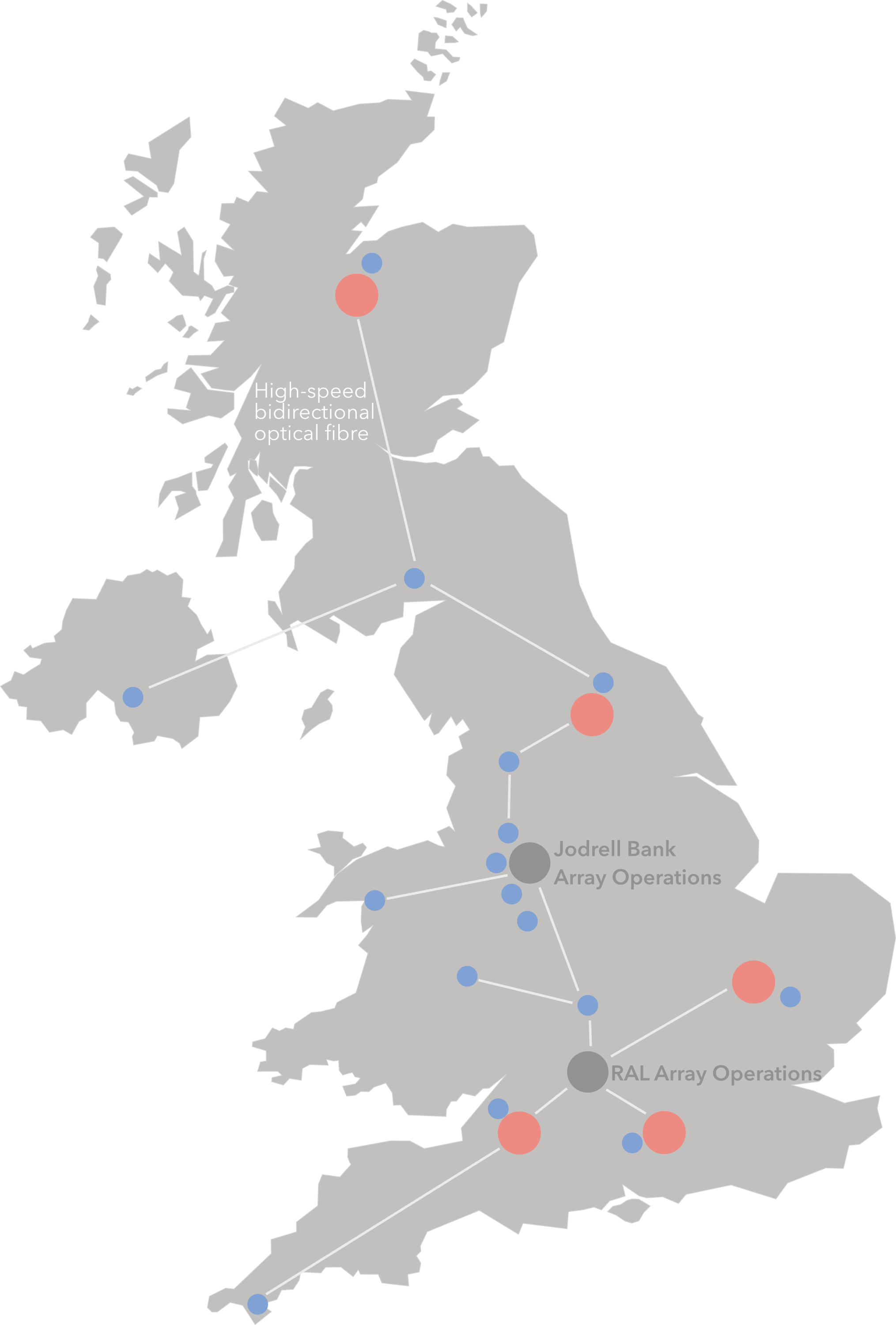
Distributed across Great Britain and Northern Ireland, using technology developed for the Square Kilometre Array (SKA) and the Low-frequency Array (LOFAR), RASOR leverages the UK's substantial investment in these international observatories as a cost-effective, low-risk route giving scientists and government agencies direct and immediate access to a world-class dual-use facility. Optimal placement of an expanded network of antennas, building on the existing e-MERLIN and LOFAR-UK facilities, is under active development with one scenario illustrated below.
rasor logo
Up to 10 new mid-frequency (1 - 26 GHz) stations for high-precision space tracking and high-resolution radio astronomy.
Up to 5 new low-frequency (<300 MHz) stations to provide accurate real-time space-weather measurements and low frequency astronomy.
Mid and Low Frequency Operations Centres located at Jodrell Bank Observatory and the Rutherford Appleton Laboratory.

High Resolution Astrophysics

RASOR is designed to meet this key requirement by providing an extended range of baselines (from 1 km up to 850 km) with all mid-frequency telescopes equipped at bands (1-2, 2-4, 4-8, 8-16 GHz) to create a world-leading facility essential for understanding the nature of the wealth of phenomena uncovered in large SKAO and multi-wavelength/multi-messenger transient surveys. RASOR will excel in the missing parameter space between the SKA and the European VLBI Network (EVN) and thus together provide continuous resolution coverage, opening up the potential for a transformation of British and European radio astronomy capabilities which can be combined further with other networks (like the US based VLBA/ngVLA) on a global scale. RASOR has also been recommended by STFC’s Science Board as it supports the UK’s SKA science community by delivering a specific long-baseline capability and access to a national infrastructure to train and grow the UK’s SKA community.

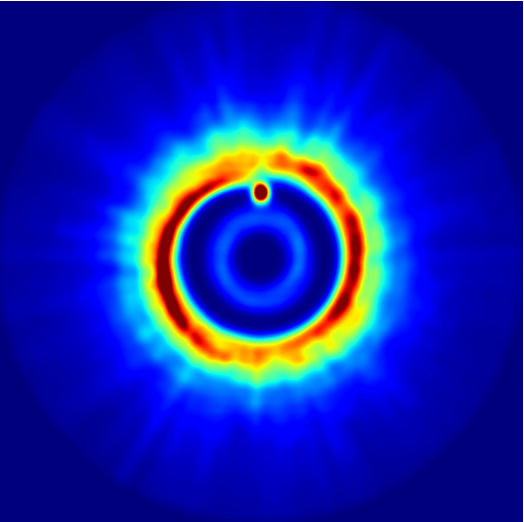
proto-planetary disk
RASOR imaging simulation of a protoplanetary disk.


Space Situational Awareness

A key facility of RASOR will be its Space Domain capable dual-use antennas as multi-static radar receivers. Coupled with existing and future radar transmitters (UK, US and NATO partners), RASOR will detect, track and characterise/image space debris and satellites in (medium and high) earth orbits with outstanding precision, thus providing a sovereign facility to support future space activities. This will allow academic, industrial and government research institutes to collaborate and engage with international partners to produce research results which improve and extend SSA capabilities and to establish global SSA networks.


Mid-Frequency Hardware

RASOR hardware will build upon the existing mid-frequency antenna and fibre infrastructure in the UK. These comprise e-MERLIN antennas already connected to the dark fibre network forming the e-MERLIN array, along with selected telescopes at Goonhilly in Cornwall. New components are currently being deployed to increase the capacity of the fibre network, simplifying future bandwidth expansion and antenna additions. New antenna sites will provide RASOR with the necessary baseline coverage to to achieve high resolution imaging capabilities. One strategic location for such an installation has already been identified on a brownfield site at the Snowdonia Aerospace Centre in North Wales.

RASOR will use SKA-mid telescopes which are high-performance, low-cost and ready to be built in volume. These offset Gregorian mounted dishes will be placed in carefully selected sites around the UK both optimising high resolution imaging (UV coverage) whilst maintaining low RFI environmental requirements.


Low-Frequency Hardware

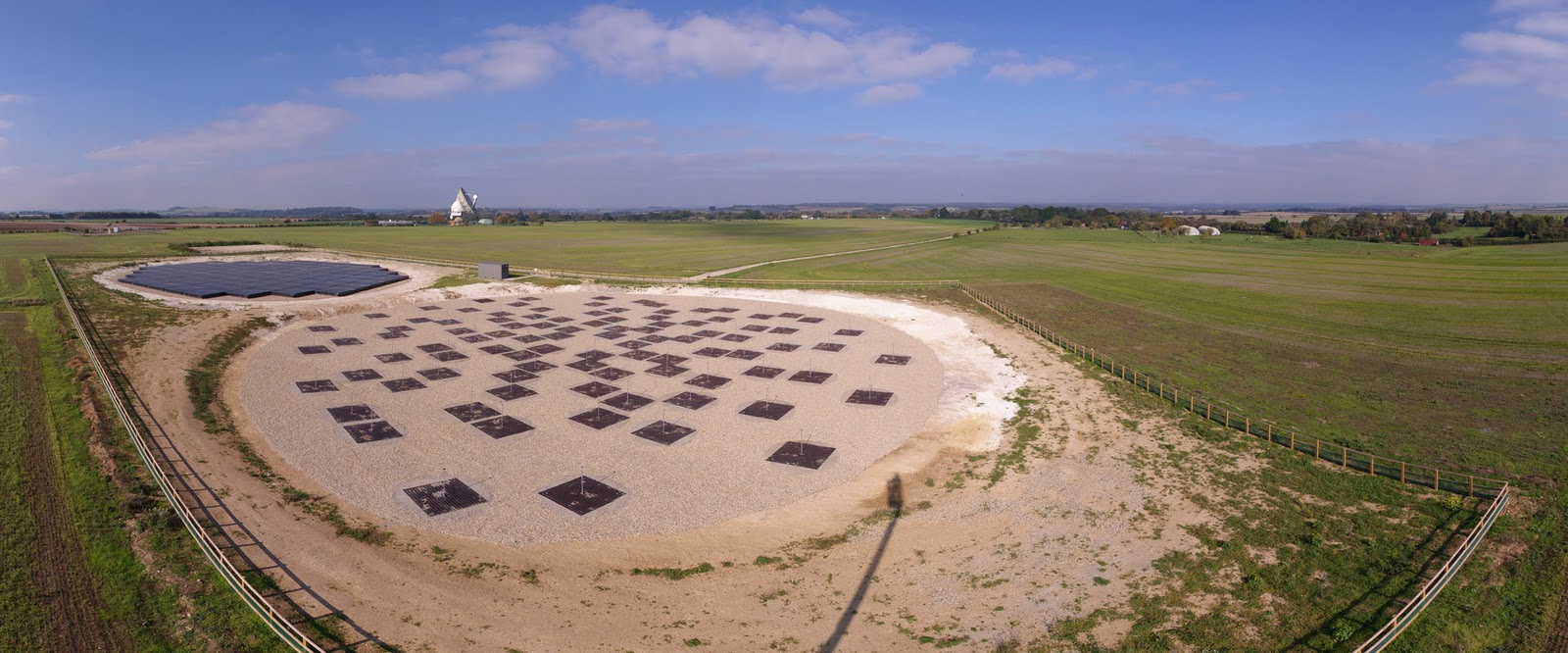
RASOR will build on STFC (and NERC) prioritisation and support for LOFAR activities and LOFAR detection of a series of upcoming upgrades to the LOFAR-UK Chilbolton station. LOFAR space weather observations have already shown great potential, but without regular monitoring and near real-time data acquisition their use is limited in operational space weather forecasting. RASOR will expand the current single UK-based LOFAR station into a full countrywide observatory for space weather, with enhanced sensitivity that radically improves our awareness and knowledge of the space environment by observing a much wider range of spatial scales, closer to the Sun, and by providing regular monitoring. Met Office space weather forecasts will be critically enhanced by the unique RASOR capability of simultaneously sensing the entire solar-terrestrial environment, enabling them for the first time to reliably support the UK’s space ambitions and missions.

The LOFAR-UK station at Chilbolton


.